

Case Interview: Janni Torp Kjærgaard, DanPilot – Changing What Cannot Fail
Critical infrastructure is often most visible when it fails.
When it works, we rarely think about it. Ships navigate safely through Danish waters, ports remain accessible, and maritime trade continues around us.
Behind part of that safety is a function with centuries of history: pilotage.
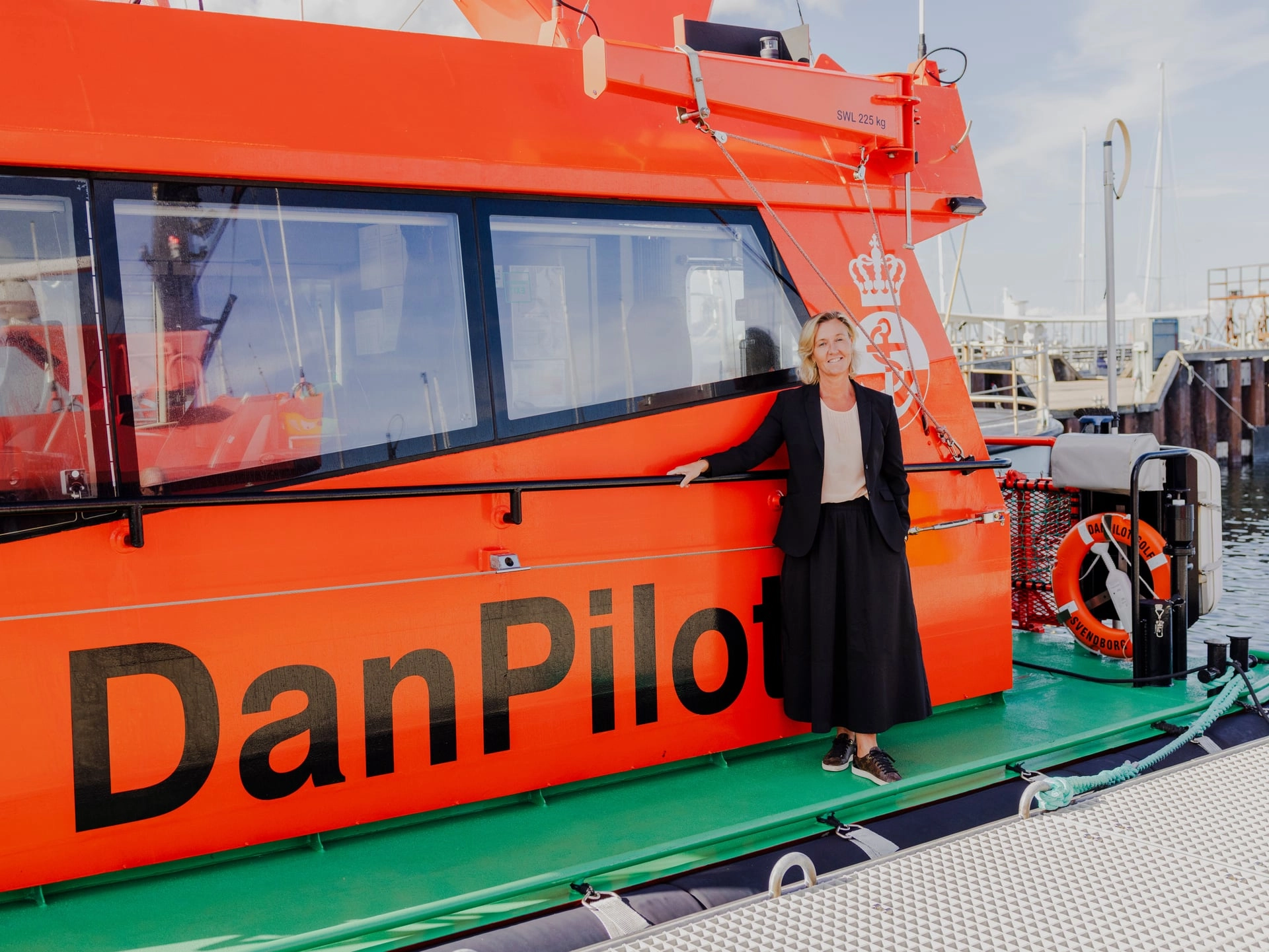
DanPilot is Denmark’s state-owned pilotage company. Its pilots help vessels navigate safely through Danish waters, protecting vessels, people, and the marine environment. It is a highly specialised task carried out in a part of the world where maritime traffic, international trade, security, and geopolitics increasingly intersect.
For Janni Torp Kjærgaard, CEO of DanPilot, this creates a particular leadership challenge.
Because DanPilot is not only responsible for transforming itself as an organisation. As a state-owned company with a public service obligation, it must maintain its core operation throughout that transformation.
“You cannot put the operation on hold while you transform the organisation,” she says. “We have an obligation to maintain the service society depends on. Safety and stable operations have to be protected throughout the transformation – but that obligation cannot become an excuse for standing still.”
That tension extends far beyond DanPilot.
Across critical infrastructure, organisations are facing a similar challenge. They exist to provide continuity and stability. But the world around them is becoming less stable, less predictable, and increasingly demanding.
Geopolitical uncertainty has returned. Security of supply has become a strategic concern. Technology is changing what is operationally possible. And infrastructure that was once viewed primarily through the lens of efficiency is increasingly being discussed in terms of resilience and national preparedness.
For Janni, this changes what it means to lead a critical infrastructure organisation.
“The core task has to work every single day. That is non-negotiable. But precisely because we carry that responsibility, we also have an obligation to develop how we deliver it. A public service obligation must be taken seriously – but it must never become something to hide behind.”
Changing without compromising the core task
In organisations where mistakes can have serious consequences, caution is not necessarily resistance to change. It can be professional discipline. Procedures, experience, and strong professional cultures exist for a reason.
The leadership challenge is therefore not to remove that caution, but to distinguish between what protects the core task and what simply protects existing ways of working.
“There is a lot of history and professional pride in DanPilot, and we should be proud of that,” Janni says. “But having a strong tradition also creates a responsibility to ask whether the way we have always done things is still the best way to fulfil our responsibility tomorrow.”
This is where safety becomes more than an operational question.
Since joining DanPilot, Janni has articulated three leadership principles: Safety, Accountability, and Collaboration. They are intended not as corporate values to be displayed on a wall, but as a framework for decision-making and behaviour.
Safety comes first for obvious reasons. But safety, in this understanding, is not created by procedures alone.
“You can have very good systems and still not have a strong safety culture,” she says. “Safety depends on people taking responsibility, speaking up, working together, and understanding why we make the decisions we make.”
That is also why organisational transformation becomes inseparable from resilience.
Critical infrastructure ultimately depends on physical assets, technology, regulation, and procedures. But it also depends on organisational capacity: whether people can make decisions, whether responsibilities are clear, whether information moves through the organisation, and whether leadership is trusted when circumstances change.
An untapped capacity for society
For DanPilot, this leads to a bigger question: What role should a state-owned pilotage company play in a maritime landscape increasingly shaped by security and preparedness?
Pilotage remains the core task. But Janni believes DanPilot’s potential contribution to society goes further.
“We operate around the clock, all year, and have around 100 people present in Danish waters. We have vessels, maritime expertise, local knowledge, and an operational organisation already in place. That is a significant capacity – and I believe there is untapped potential in thinking much more systematically about how it can contribute to society.”
The argument is not that DanPilot should abandon its core task. Quite the opposite.
It is that Denmark can become more resilient by thinking across existing state capabilities and considering how they can reinforce one another.
“We need to become better at thinking across the state’s existing capacities,” Janni says. “In a world where preparedness matters more, we should ask how different capabilities can work
together to create a stronger overall response. DanPilot has something very concrete to contribute to that.”
That moves the discussion from the role of one company to a broader question of national preparedness: How can existing public capabilities be combined more intelligently before a crisis occurs?
When technology is ready before regulation
Technology raises a similar question – and for DanPilot, it is no longer hypothetical.
Remote pilotage has been tested through 180 real-life pilotages at sea and independently evaluated. DanPilot believes the solution is ready to move to the next stage.
“We have tested it in real operations, we have had it independently evaluated, and we are ready to move forward. For us, the point is exactly that safety and innovation have to go hand in hand.”
The potential is broader than technological innovation for its own sake.
Remote pilotage can contribute to safety while reducing fuel consumption and emissions. It can create value for customers and make parts of the service more stable because delivery is less dependent on weather and sea conditions.
That is why Janni believes the regulatory assessment needs to look beyond a narrow technological or navigational safety lens.
“The question should be: How do we deliver the core service in a way that creates the greatest overall value for customers and society? Safety is fundamental, but the societal impact also includes resilience, the green transition, customer efficiency, and security of supply.”
Regulation exists for good reason in safety-critical infrastructure. But according to Janni, responsible innovation also requires regulators willing to engage with new possibilities.
“We do not need lower safety standards. We need regulatory authorities with the courage to look at the whole picture – and frameworks that allow proven innovation to move forward when the evidence supports it.”
Stability through change
For DanPilot, these questions are part of a broader transformation. The company is working with its strategic direction, leadership, organisation, customers, technology, and our role in wider society at the same time.
That can appear to be many separate agendas.
Janni sees them as one.
“Our responsibility is to safeguard the core task while developing the organisation around it. We have to be able to deliver today, tomorrow, and while we change. That means leadership, technology, culture, customers, and our relationship with the society around us.”
Perhaps that is the paradox at the centre of critical infrastructure.
Its fundamental promise is continuity.
But keeping that promise in a changing world requires transformation.
For leaders, the task is therefore not to choose between stable operations and change. It is to transform without ever losing sight of the societal obligation that must be fulfilled every single day.